Happy New Year! I’ll be honest- I’m not usually a person who starts the year with a reading challenge. Life is too complicated and unpredictable to try and get myself to read a set number of books. But on the other hand it occurred to me that 2024 represents more than a few big anniversaries in the history of Black Romance and they’re by and large books that I own but haven’t read yet! So the list below is now my mission for the year, and I want you to join me!
Most of these books, with the exception of Night Song, are contemporary romance, and they represent a range of tropes that were popular at the time. There are also queer love stories by Ann Allen Shockley and E. Lynn Harris represented. My goal in reading them isn’t to try and pick them apart as texts, but rather to understand how they fit within the romance genre of their time and how they came to exist in moments where the mainstream romance community was hostile to Black voices.
So let’s dig in! I’ll group them by their particular anniversary, then I’ll talk about why they’re important and, crucially, how best to find them in 2024.
55 Years
Marilyn Morgan, R.N. by Rubie Saunders (Signet, 1969)
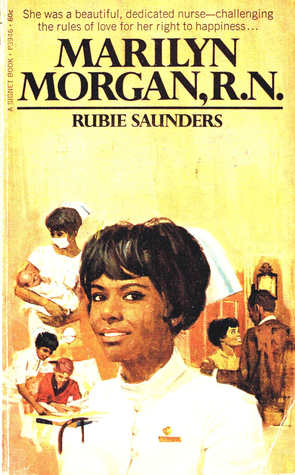
Why: Rubie Saunders was editor at Calling All Girls Magazine, a teen magazine that would later evolve into YM, when she published her first work of fiction in 1969. Written in the typical style of the nurse romance of the time, Saunders’ book was the first nurse romance to be written by a Black author and include Black characters. Saunders put a twist on one of the most typical tropes of the genre at the time over the course of the four books in the Nurse Morgan series- her main character never married. Nurse Morgan ended each book happily dating the doctor who had pursued her over the course of the book, but each new book began with Nurse Morgan being single again.
How to find it: Perseverance and dumb luck? The books in this series are hard to find online and often command big prices (I think that’s kind of my fault, sorry not sorry?). But sometimes you can luck out in a used bookstore or an ebay lot.
50 Years
Loving Her by Ann Allen Shockley (Bobbs-Merrill, 1974)
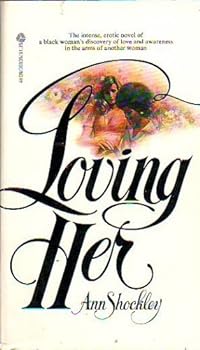
Why: Ann Allen Shockley, who served as a librarian and archivist at Fisk University from 1969-1988, is widely known in the library world for her extensive writing on Black special collections and her bibliography work on Black authors. In 1974 she published Loving Her, an interracial lesbian love story. While not strictly speaking a romance novel, the main characters are together at the end of the book, a plot point that was still a relative rarity in a mainstream novel in 1974.
How to find it: Loving Her has been reprinted a number of times over the past 50 years by small and major presses alike, so it’s not impossible to find. However, the prices for both the 1974 hadrcover and 1980 Avon reprint do run high.
40 Years
Adam and Eva by Sandra Kitt (Harlequin, 1984)

Why: Sandra Kitt was signed to Harlequin by Vivian Stephens during Stephens’ time as editor of the Harlequin American line. Her first book for the company was Rites of Spring, which featured white main characters. With her third book, Adam and Eva, she became the first Black author to write Black characters for Harlequin.
How to find it: Adam and Eva has been republished a number of times over the years, including as a widely available ebook. Original 1984 printings (look for ISBN 0373160860) are tricky to find and can be expensive, but if you’re just looking to read the text, there are plenty of options out there.
30 Years
Looks Are Deceiving by Maggie Ferguson (Harlequin, 1994)
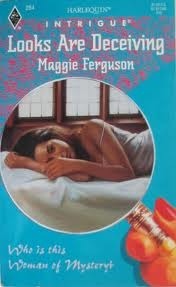
Why: Looks are Deceiving was both the first Harlequin Intrigue to be written by a Black author, featuring Black main characters and the first Harlequin of any series to include Black main characters since Sandra Kitt’s Adam and Eva ten years earlier. Maggie Ferguson went on to write four Harlequin Intrigues, all featuring Black main characters.
How to find it: Ferguson’s books pop up fairly frequently on online sites and are still under $10 each most times. You may also be able to find them at a local mystery used book store if you’ve got one of those around.
Invisible Life by E. Lynn Harris (Anchor Books, 1994)
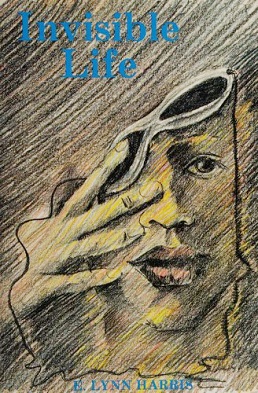
Why: E. Lynn Harris self-published Invisible Life in 1991, and it was picked up by Anchor Books (a Doubleday imprint) in 1994. While not a romance novel, it was one of the first mainstream books of its era to portray the love lives of gay and bisexual Black men. Prior to his death in 2009, Harris wrote more than a dozen novels and was one of the best selling Black authors of his generation.
How to find it: Harris’s books are beloved and most have been reprinted multiple times over the years. Easy to find in both physical and ebook versions. Copies of both the self-published 1991 and 1994 Anchor editions pop up regularly and are relatively reasonably priced.
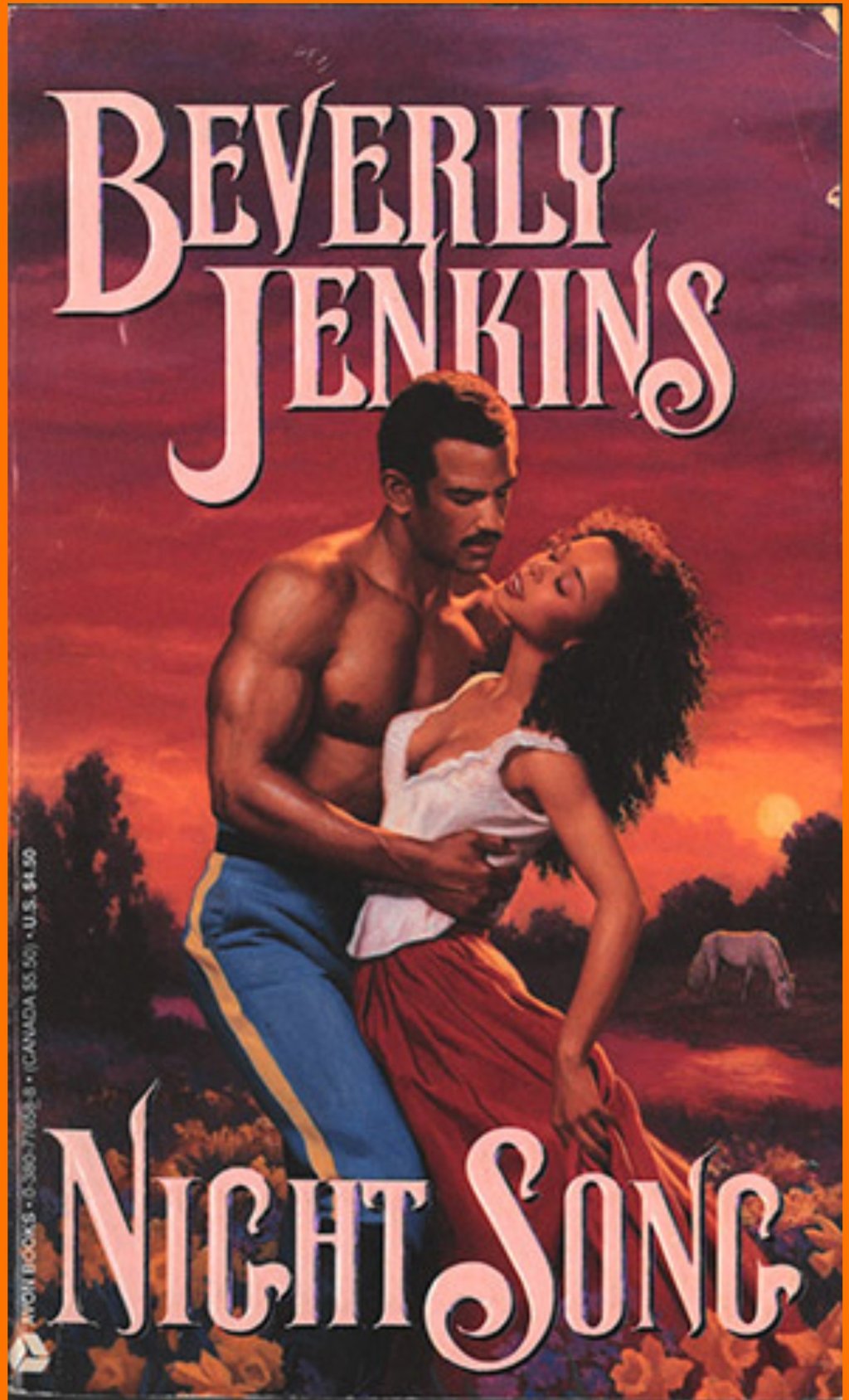
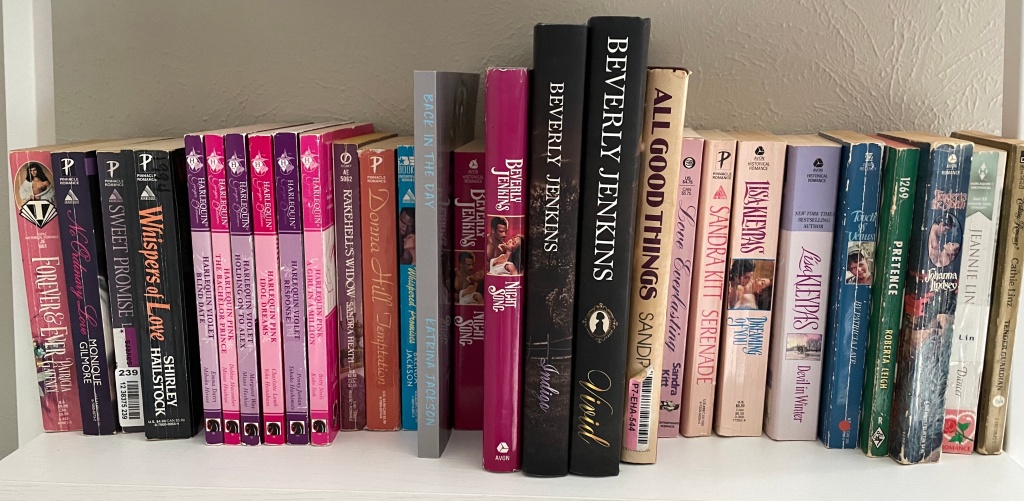
Night Song by Beverly Jenkins (Avon, 1994)
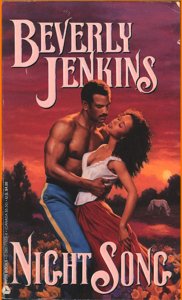
Why: Beverly Jenkins’ debut is beloved by fans 30 years later for good reason. In addition to being the first major publisher historical romance by a Black author featuring Black characters, it introduced readers to Jenkins’ signature blend of little-known Black history and the intense passion of her main characters. Jenkins’ agent at the time Night Song was released was Vivian Stephens, who appeared earlier in this list as Sandra Kitt’s editor at Harlequin.
How to find it: The good news is that this book has never gone out of print, and Avon is still selling new copies. The bad news is that first paperback printings are very, very hard to find. If you’re looking to just get your hands on the original’s classic clinch cover, seek out copies printed before 2009. A hardcover edition was published in 1994 at the same time as the paperback, and lately those pop up more frequently than the first paperback printings.
July 1994: Kensington’s Arabesque line launches
Why: Unlike many of his romance publishing competitors in the 1990s, Kensington boss Walt Zacharius wasn’t afraid to experiment with new ideas in order to increase his company’s share of the market. He tried lines that focused on older adults, on male POV, and a line called Encanto that was printed in both Spanish and English. But the most successful of his experiments was by far Arabesque. Understanding that there were untapped Black readers, as well as Black authors dying for a shot, he hired Monica Harris as the line’s first editor and over the first six months of the line’s existence they released 11 novels and one collection of short stories. The authors ranged from the experienced and popular Sandra Kitt to debut authors like Felicia Mason and Shirley Hailstock. By the end of 1994, Kensington had released more Black romances in six months than any single major publisher had in their entire existence.
How to find them: Most of the books listed below received multiple printings because of their popularity, and several were re-released by BET Books after that company bought the Arabesque imprint. As a result, most titles are abundant and inexpensive. The only title on the list below that I struggled to find online was Sweet Promise by Layle Giusto, which I think only had one printing.
The books:
Serenade by Sandra Kitt (Arabesque, July 1994)
Forever Yours by Francis Ray (Arabesque, July 1994)
Beguiled by Ebony Snoe (Arabesque, August 1994)
A Sweet Refrain by Margie Walker (Arabesque, August 1994)
Happily Ever After by Rochelle Alers (Arabesque, September 1994)
Whispers of Love by Shirley Hailstock (Arabesque, September 1994)
Temptation by Donna Hill (Arabesque, October 1994)
For The Love of You by Felicia Mason (Arabesque, October 1994)
Bands of Gold by Angela Benson (Arabesque, December 1994)
No Ordinary Love by Monique Gilmore (Arabesque, December 1994)
Sweet Promise by Layle Giusto (Arabesque, December 1994)
Spirit of the Season (collection) by Donna Hill, Francis Ray and Margie Walker (Arabesque, December 1994)
And that’s everything I know of! For now, of course.
If you made it this far through this very long post, I appreciate you! Let me know down below what books sound interesting to you. As I often say, Black Romance has a history! And this confluence of anniversaries makes 2024 an ideal year to celebrate that.



 Romance Fiction Has a History
Leave a comment